WVF Final Project Update
Our largest project to date has officially come to a close. While this phase of the work has ended, the results have been deeply inspiring - demonstrating both the impact already achieved and the enormous potential to scale in the years ahead.
Like many countries across Southeast Asia, Thailand faces significant climate risks. Rising temperatures and increasingly volatile weather patterns are placing growing pressure on agricultural production and food security. As Zero Foodprint Asia’s second regional project outside Hong Kong, this initiative set out with a clear objective: to help regenerate the broader agricultural supply chain while strengthening the resilience of local food systems.
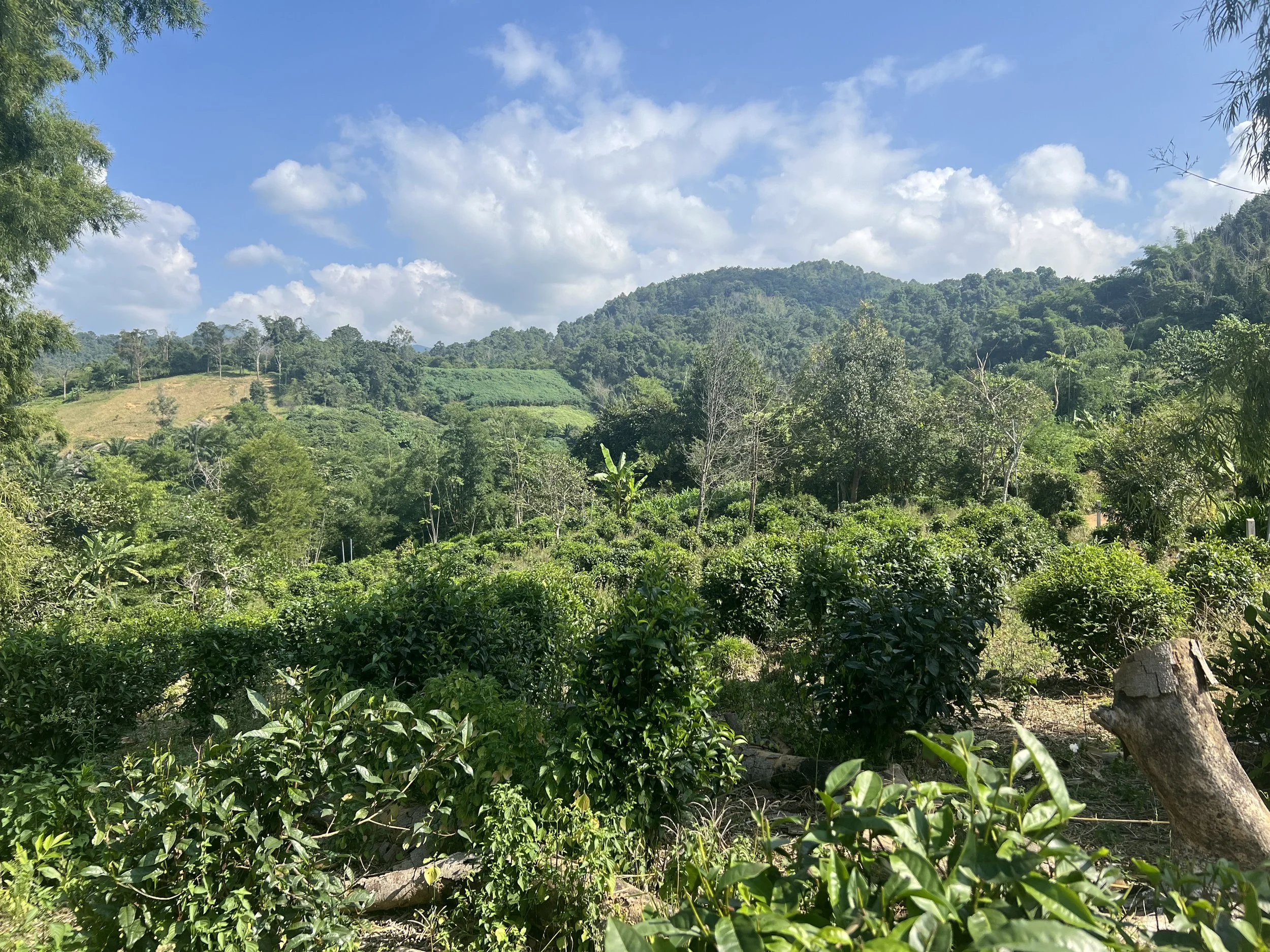
Over the past 18 months, we collaborated with reNature, Wawee Valley Foundation (WVF), and Hilltribe Organics - the social enterprise founded by the same team behind WVF. Together, the partnership developed a comprehensive master plan and piloted a regenerative agroforestry hen model farm in Chiang Rai.
With the potential to influence more than 100,000 acres across the valley, the project demonstrates how regenerative models can scale while empowering farmers to strengthen food sovereignty and long-term livelihoods.
Let’s take a closer look at how the project came together.
Designing a Market-Oriented Biodiversity Powerhouse
Hilltribe Organics has long worked with farmers in the region to produce organic eggs and distribute them to local retailers. Because of this existing supply chain, the master plan needed to integrate seamlessly with the current hen production model while also creating stronger links to both local and international markets.
To inform the design, the reNature and WVF teams worked closely with local communities across the valley. Farmers were consulted about their cultivation experience, crop preferences, and economic needs. From these discussions, a long list of 20 potential crop and tree species was developed for the model farm - selected not only for their ecological suitability to the region but also for their market potential.
The proposed design was then reviewed by local agricultural expert Pathom Meekaew, who brings more than 25 years of experience in cacao and coffee production as well as strong connections to regional markets. His input helped ensure that the system would deliver both short-term income opportunities and long-term economic sustainability for farmers.
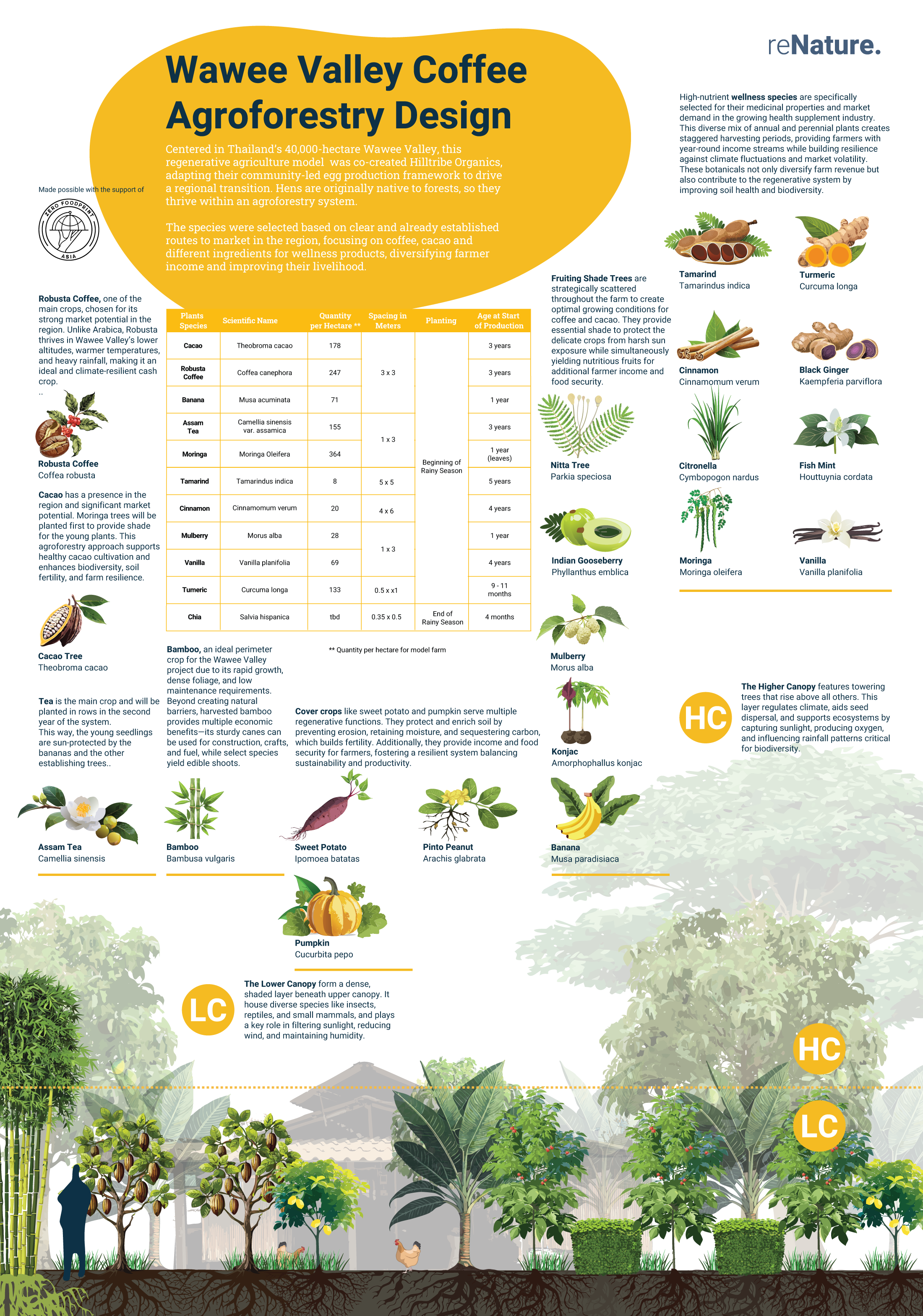
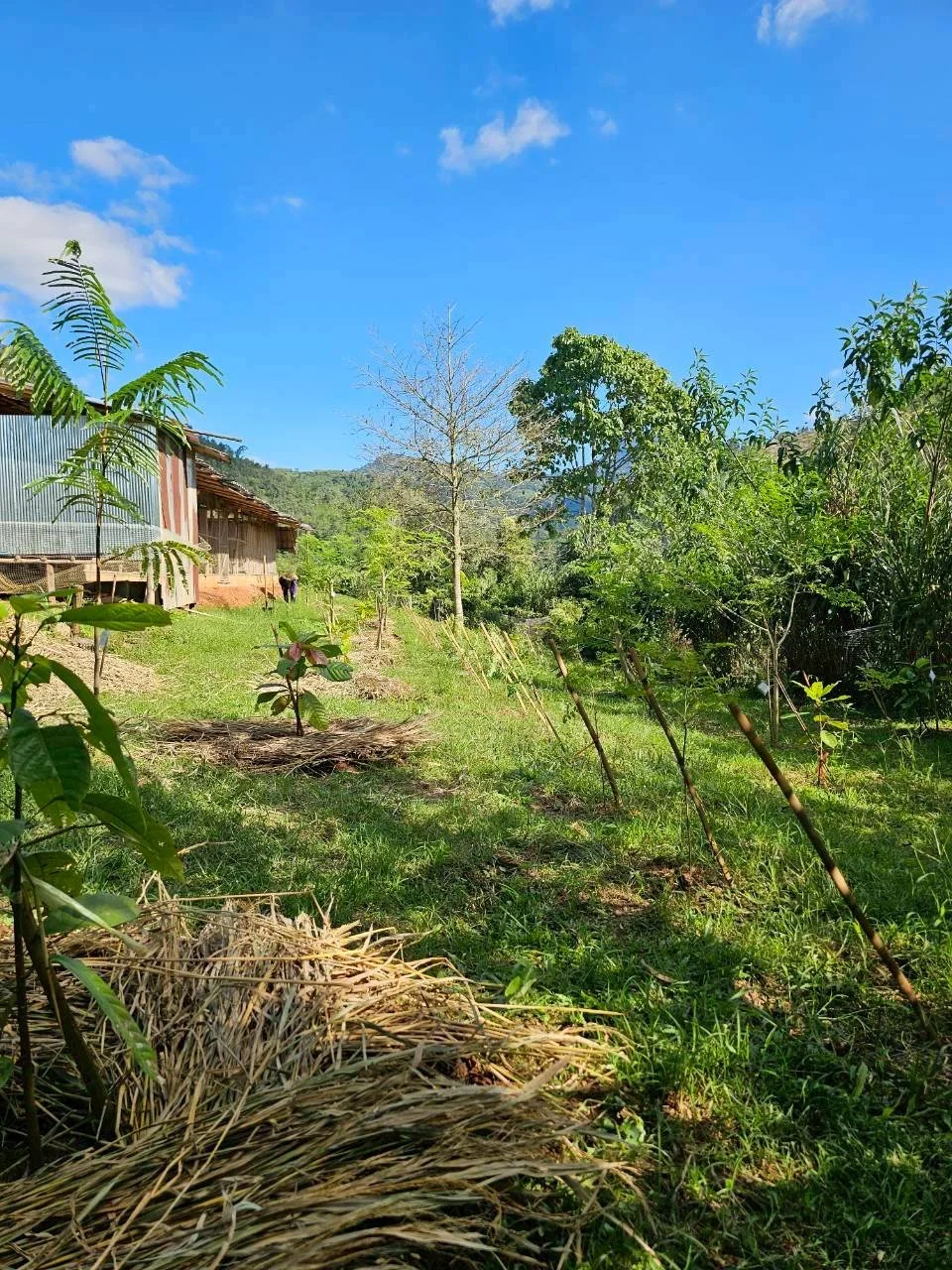
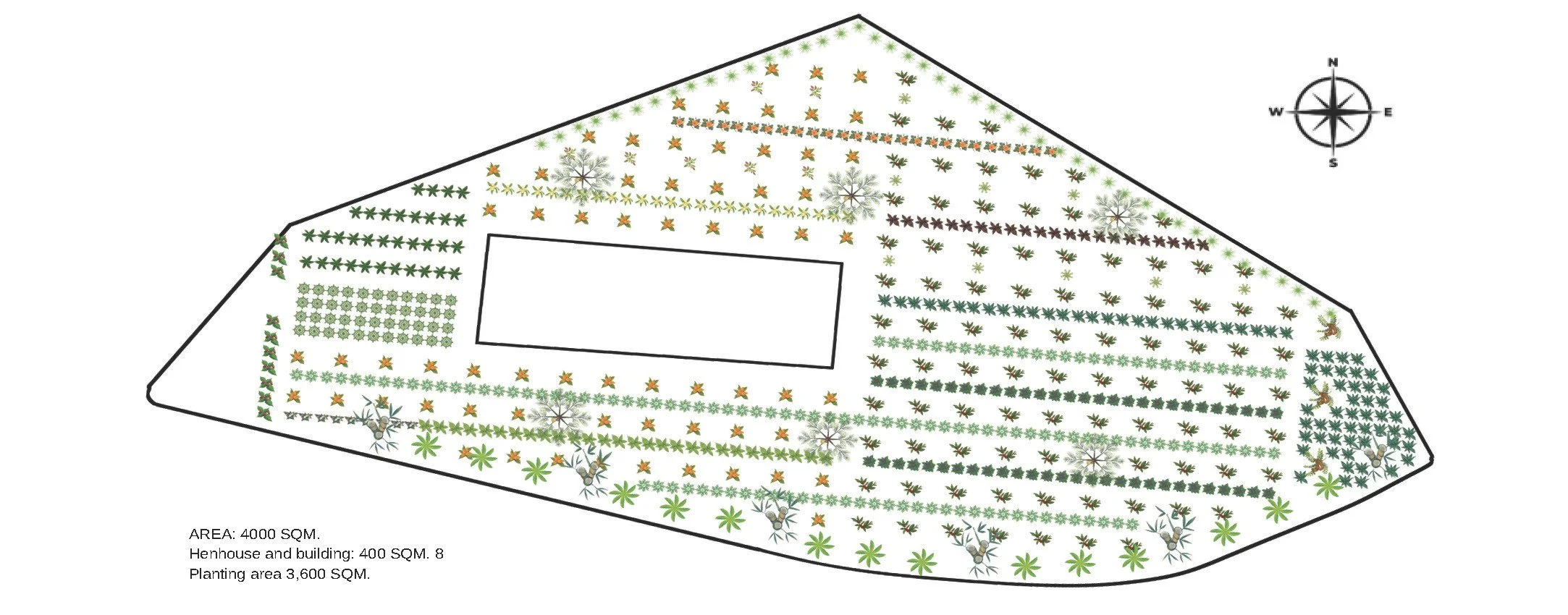
The final model farm spans 0.4 hectares and includes 311 crops and trees integrated alongside a regenerative poultry system. Around 700 chickens are now managed collectively by 20 farmers, creating both diversified farm outputs and improved soil health through natural nutrient cycling.
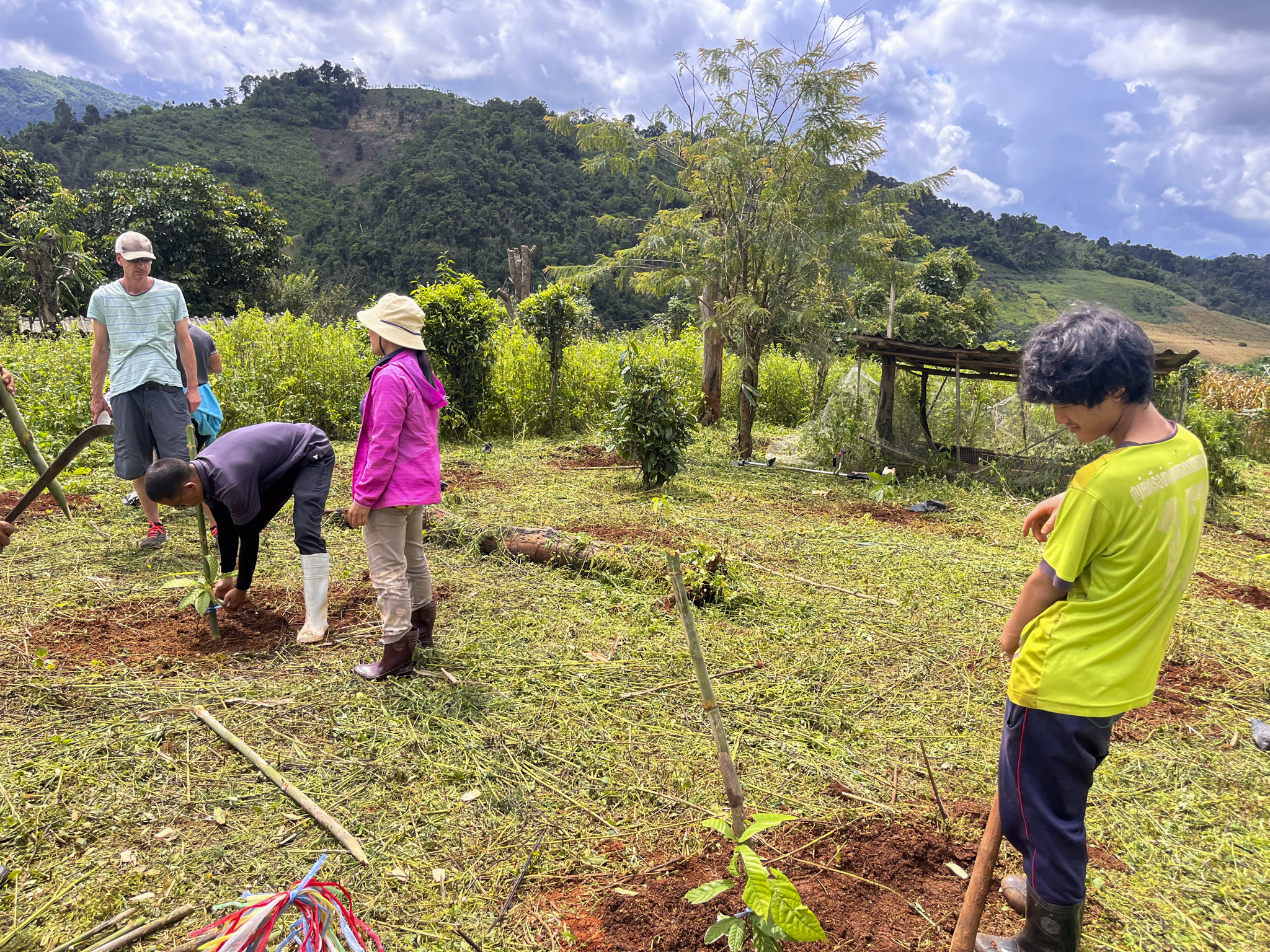
To support future expansion, more than 600 additional trees have also been distributed to farmers throughout the valley - providing an early foundation for scaling the regenerative model across the wider landscape.
A Diverse and Regenerative Farm Design
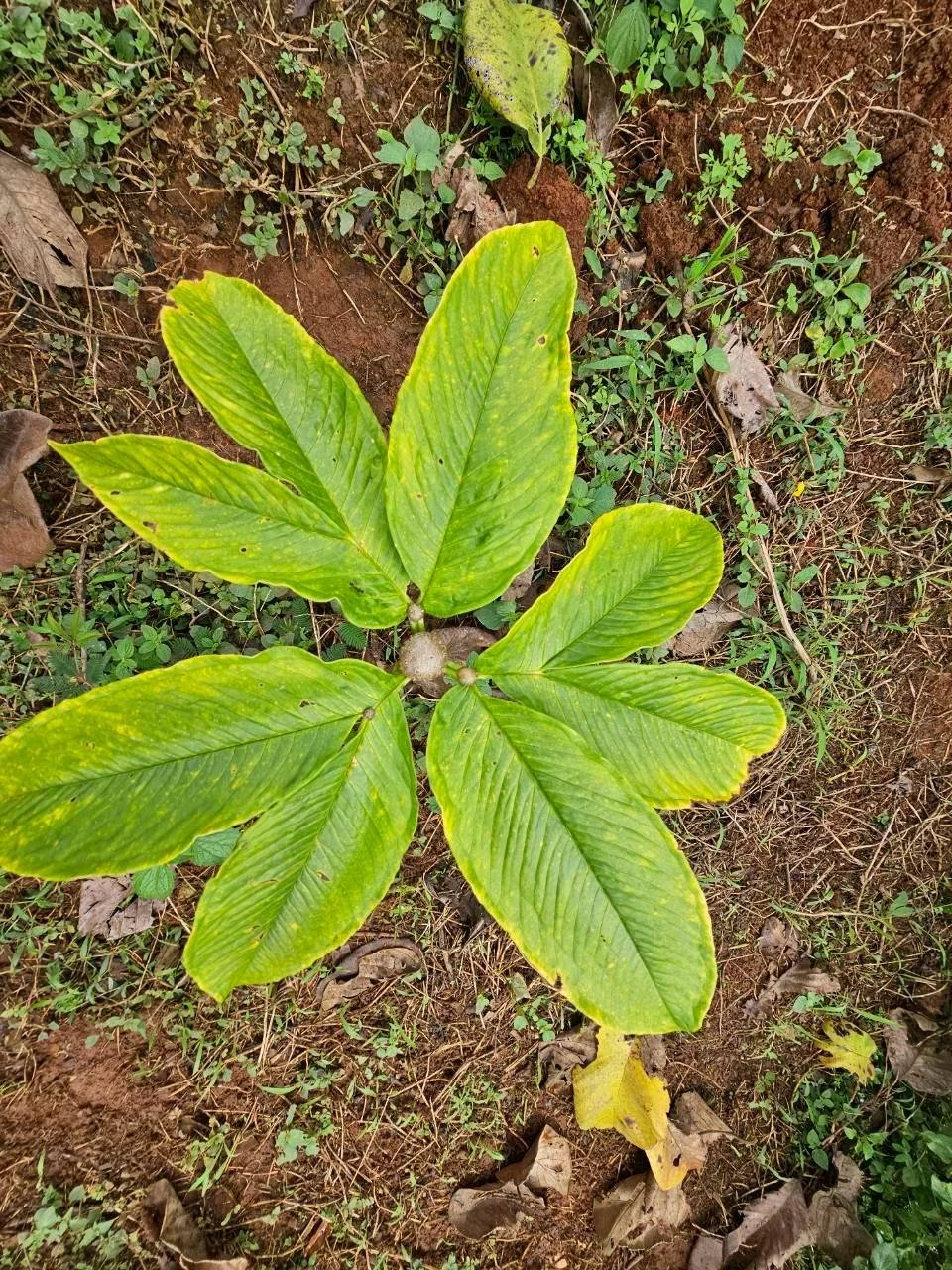
The model farm design incorporates a diverse mix of crops selected for both ecological value and market opportunity. This includes wellness crops known for their medicinal properties and strong consumer demand - such as turmeric, black ginger, and citronella - alongside long-term high-value crops like cacao and coffee. Faster-growing crops, including sweet potato and bamboo, provide additional sources of food and short-term income for farmers while the perennial systems mature.
This project also marked the first time Zero Foodprint Asia has used a high-tech project screening tool to inform farm design. Through the Kanop platform, satellite imagery and spatial analysis were used to refine land-use planning and identify optimal crop suitability zones across the valley.
The tool assesses a wide range of environmental factors - including elevation and slope, water access, soil pH, above-ground biomass, and precipitation patterns - allowing the team to design a system that works in harmony with the landscape rather than against it.
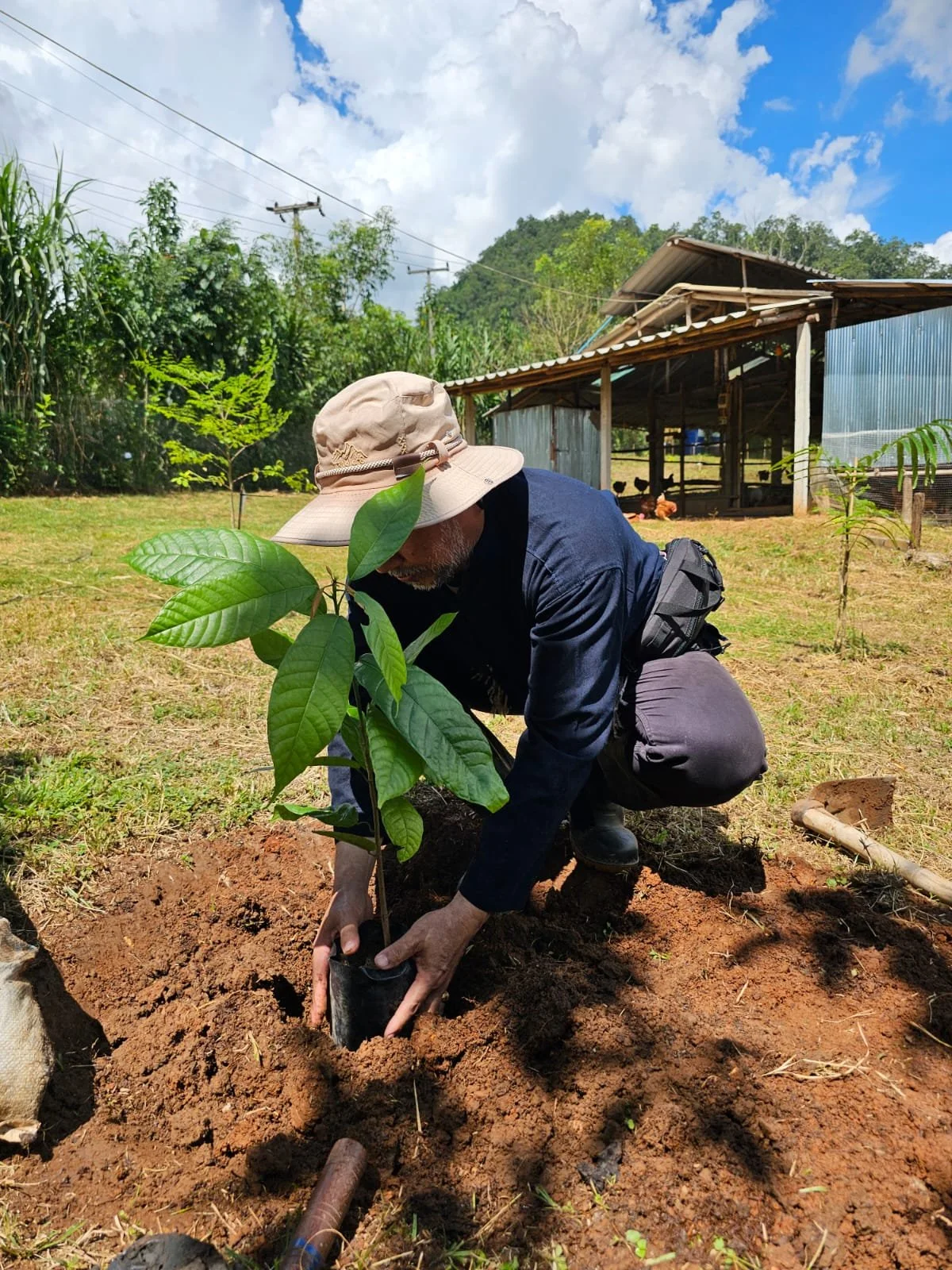
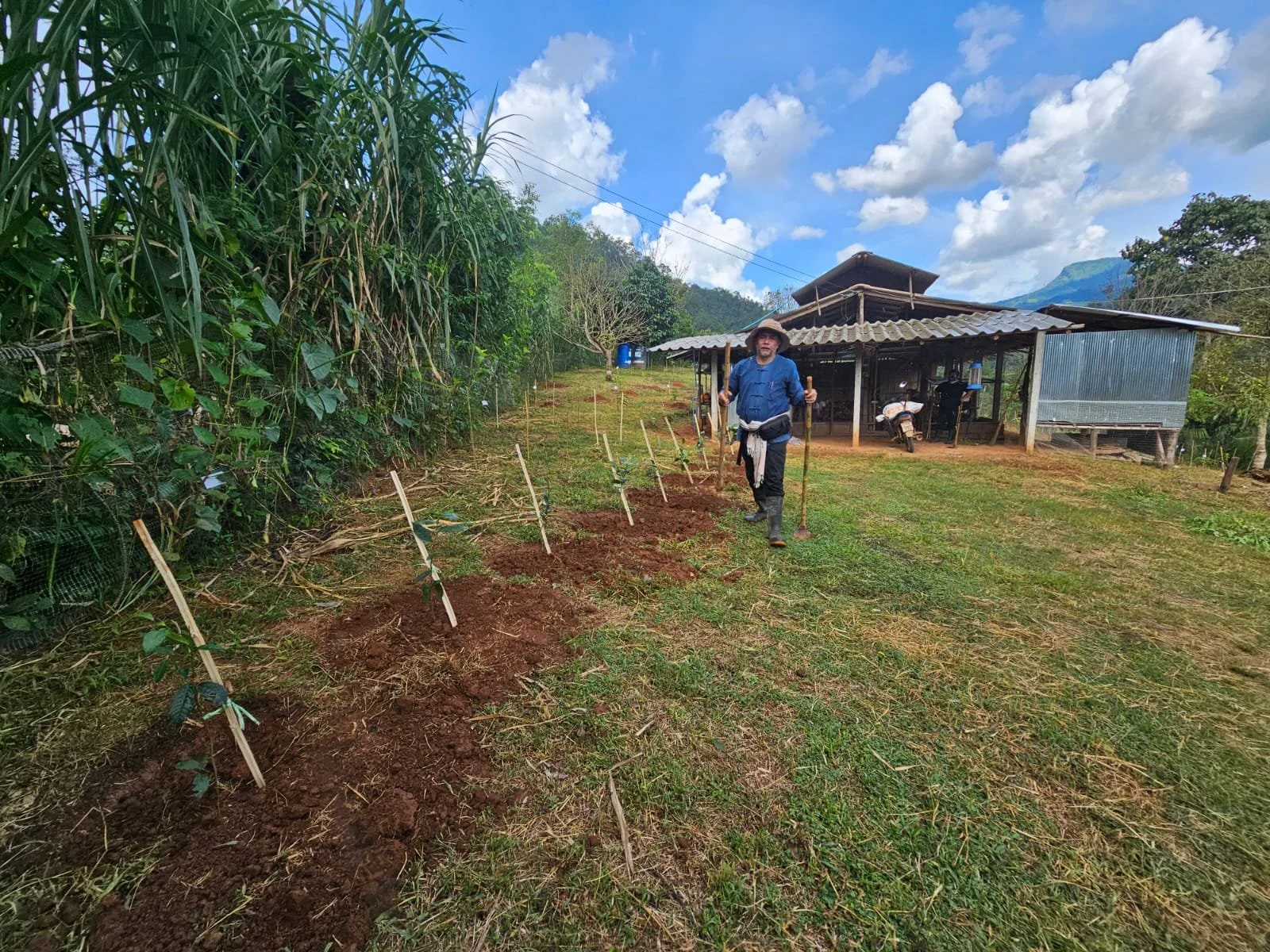
With multiple layers of validation behind the master plan, the project began on strong foundations. Since its launch, the initiative has already drawn international attention from buyers, government stakeholders, and the media, helping to raise awareness of the regenerative agroforestry hen model as a resilient and scalable farming approach.
Building Knowledge and Capacity
Ensuring the success of the model farm required not only careful design, but also strong farmer engagement and training.
To support this, agricultural expert Pathom Meekaew has been hosting regular capacity-building sessions for more than 40 farmers across the valley. In addition to monthly site visits, these trainings cover topics such as crop cultivation, pest management, integrating hens within mixed cropping systems, and regenerative practices like mulching.
Like any ambitious project, the initiative faced challenges along the way. During the early setup stage, an unexpected personnel change resulted in farmers temporarily deviating from the original planting design, with several trees mistakenly removed during weeding activities.
Pathom responded by conducting additional visits to help correct the layout and guide farmers in restoring the intended design. At the same time, the Wawee Valley Foundation team recruited two trained agronomists to support project management and field monitoring, helping stabilise operations and ensure the project continued on track.
Healthy Soil for Carbon Sequestration
Earlier project updates highlighted the model’s potential for carbon sequestration. Current projections estimate that the system could capture approximately 9,785 tonnes of CO₂ over the next ten years.
To put this into perspective, this is roughly equivalent to the emissions produced by burning more than 1.1 million gallons of gasoline.
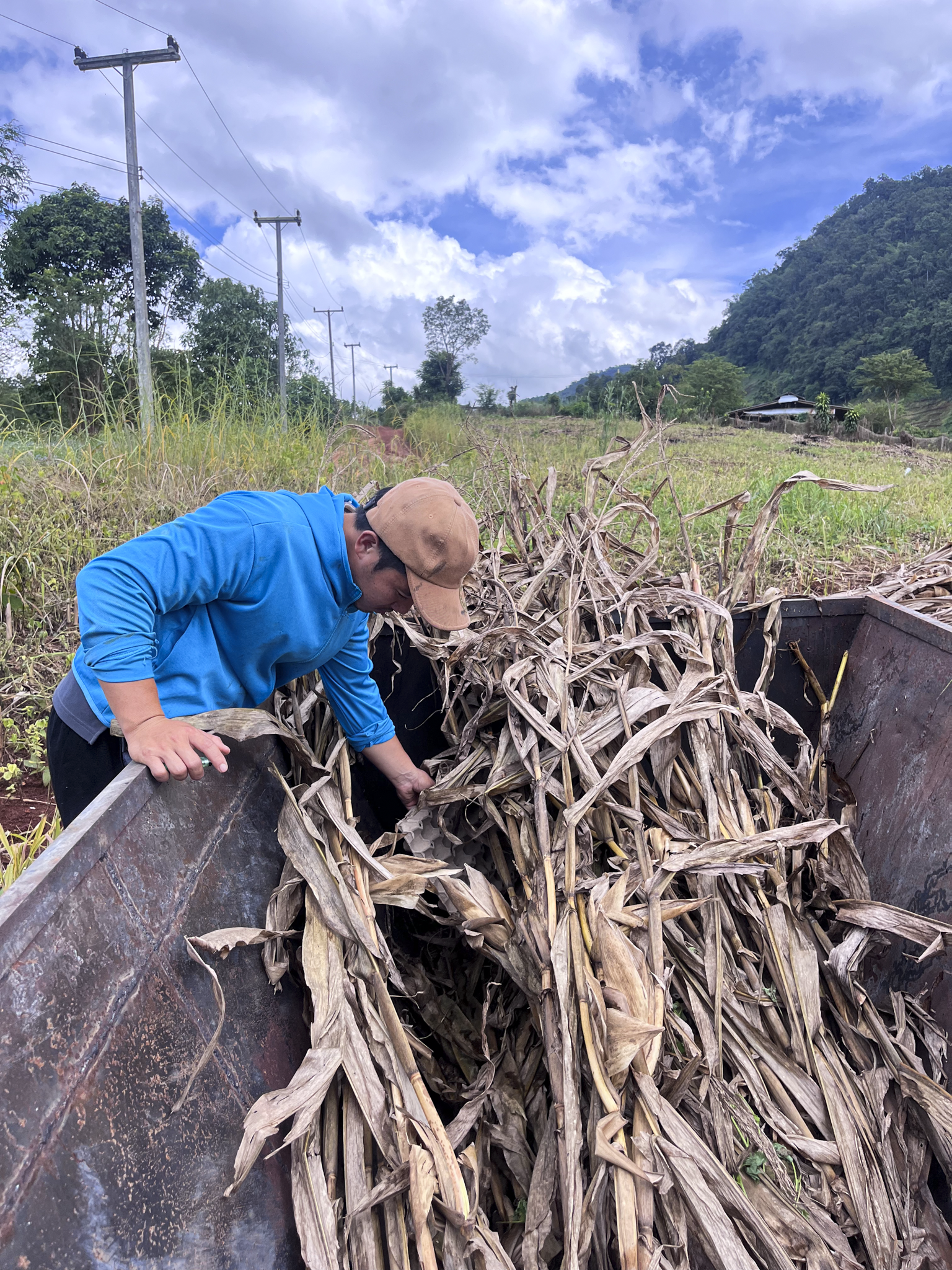
Baseline soil samples were collected in October 2025 and analysed by Maejo University. The results showed a soil organic carbon (SOC) level of 3.6%, alongside healthy nutrient levels across the site.
For comparison, the average SOC level in coffee cultivation across tropical regions typically ranges between 1–3%, meaning the model farm is already performing above average. Research also suggests that well-managed agroforestry systems for coffee and cacao can reach SOC levels above 9.8% over time.
These findings reinforce the long-term potential of the system to build healthier soils, sequester greater amounts of carbon, and produce high-quality crops within a resilient regenerative landscape.
Looking Ahead
With the Wawee Valley Foundation preparing to relocate its office, the team is now focused on scaling the model across the valley.
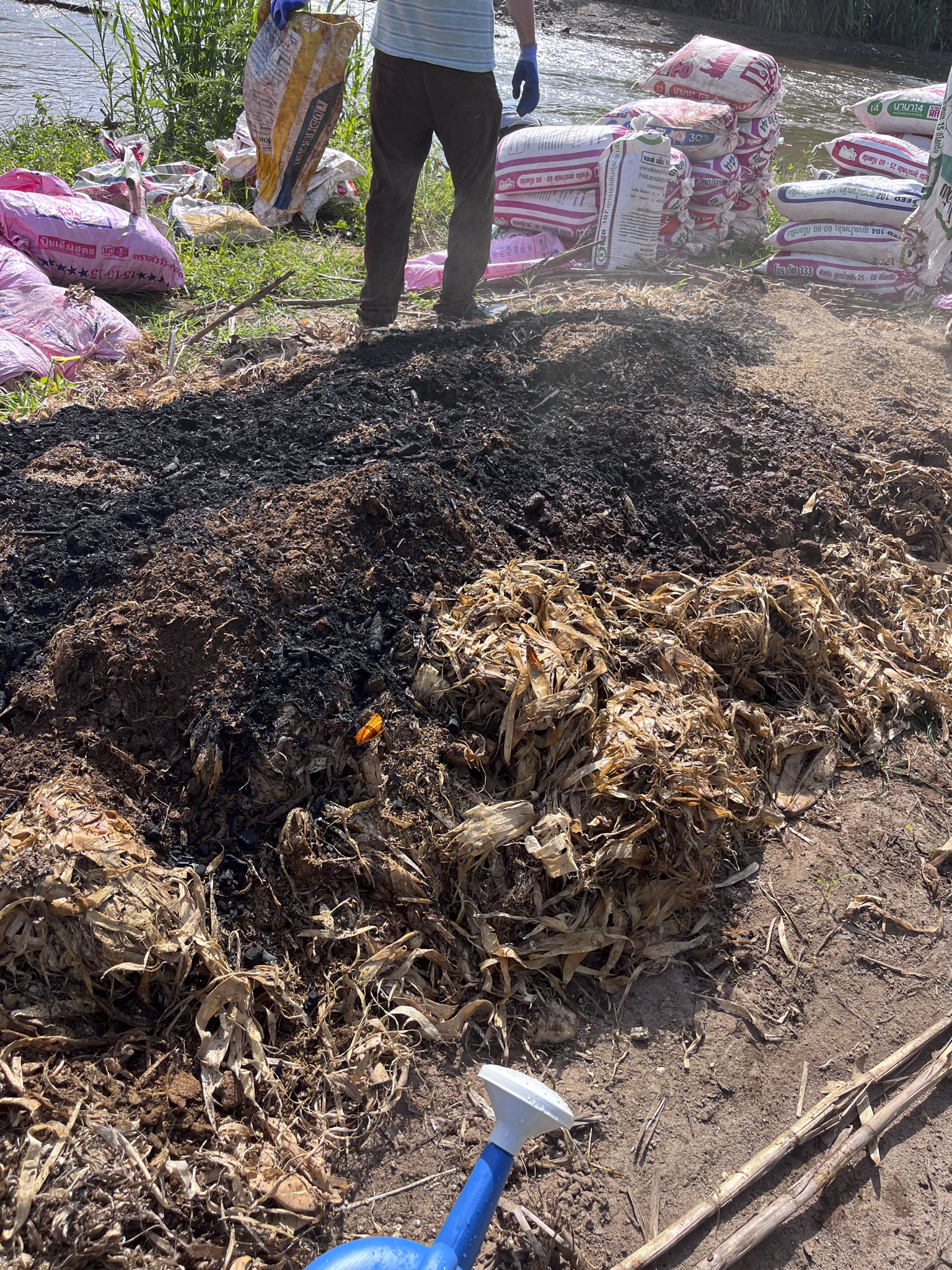
Future expansion will build on the synergies already created between the agroforestry hen system, compost production, and biochar initiatives. Additional regenerative farm models are also being explored for crops such as corn, chia, and rice.
An initial survey has already been conducted with a shortlist of 50 farmers to assess the suitability of their land for future projects. The first phase of scaling aims to restore more than 400 acres of farmland over the coming years and positively impact over 27,000 community members across the valley.