Our Malaysia Pilot is Underway!
As we launch our pilot project with Aspen Impact Foundation (AIF) and SHE™ Intelligence, we are thrilled to share that we have selected the initial seven farm sites across Penang, Selangor, and Pahang that will lead the regenerative transition in Malaysia.
From vegetable plots to perennial orchards, these farms represent the rich diversity of Malaysian agriculture. This diversity of farms allows us to explore how the regenerative transition can be adapted across different crops, soils, and farming systems, generating lessons that are locally relevant and scalable.
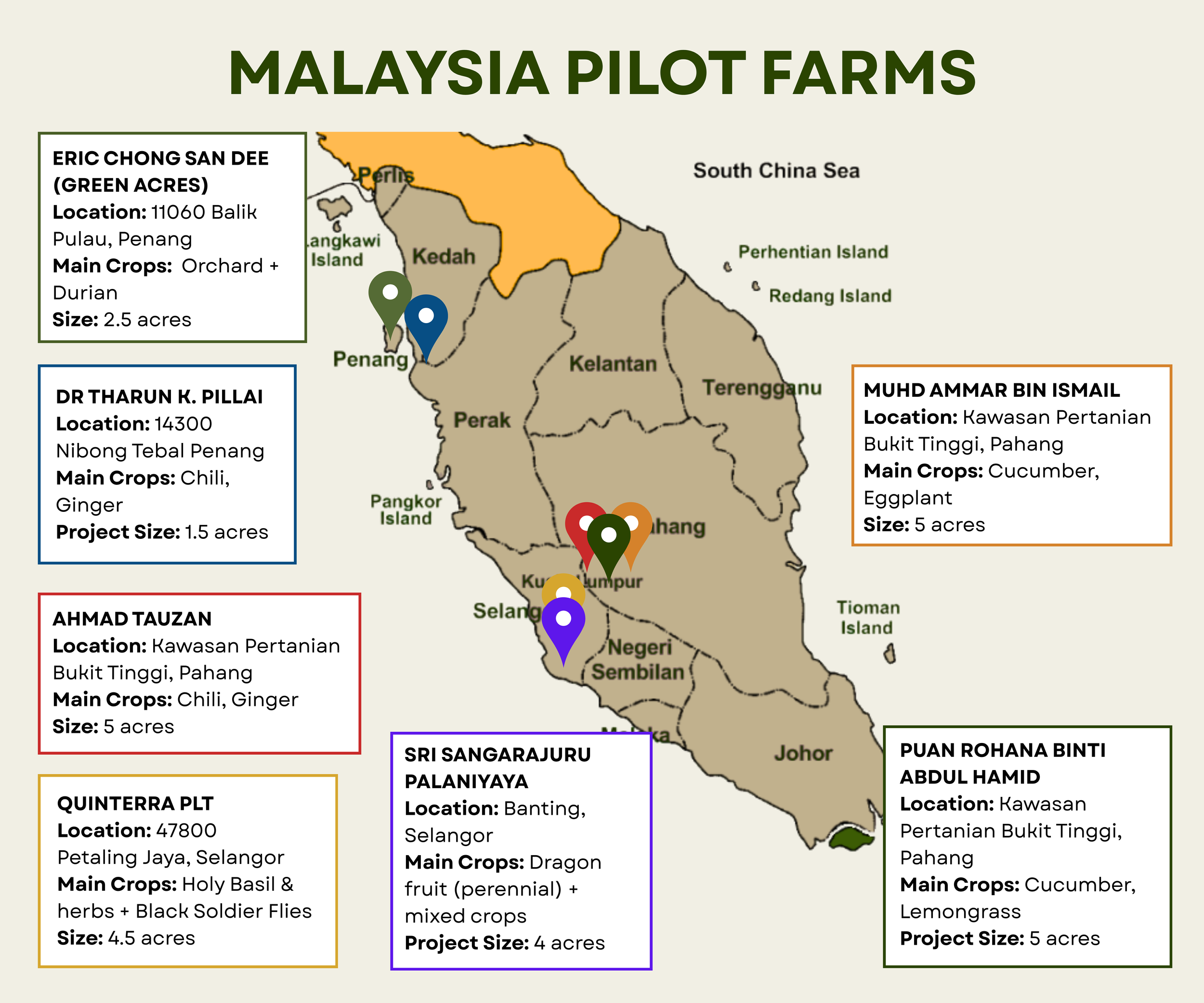
Map of selected farm sites
Diverse Farms, Tailored Pathways
The farms joining us range from beginners starting from a conventional baseline to knowledge-led growers already experimenting with regenerative methods. Some grow short-cycle vegetables like chilli and cucumber, while others manage established orchards of durian, rambutan, and dragon fruit. A few operate mixed annual-perennial systems, balancing herbs with fruit trees. This mix is intentional, as we are not applying a single solution but rather exploring how a regenerative transition can be structured across distinct farm profiles. That diversity strengthens what we can learn, informing how the masterplans we develop will remain differentiated rather than standardised.
From Assessment to Actionable Plans
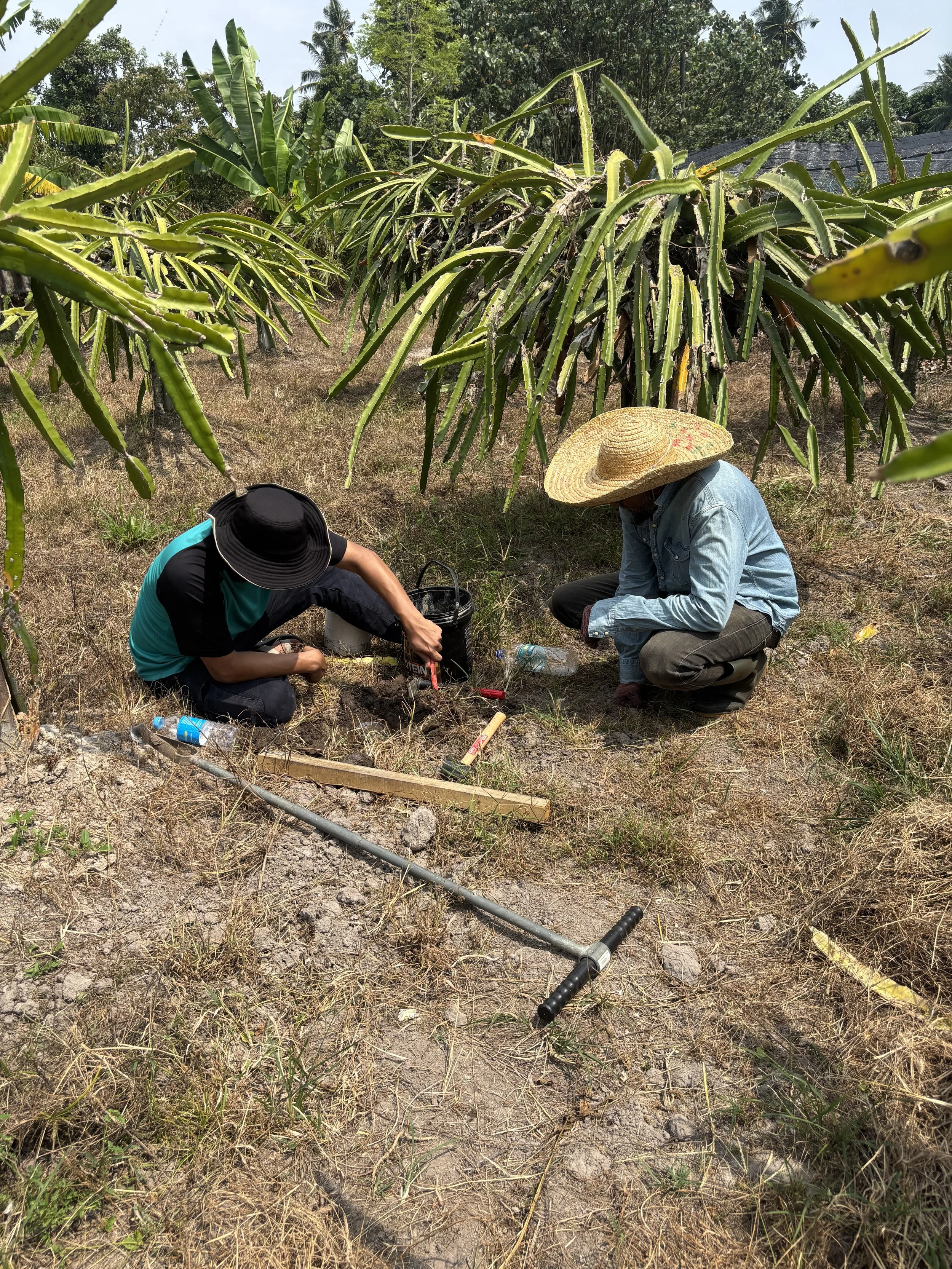
Over the last few months, our technical team has dedicated time to each farm, assessing physical conditions, biological health, and social readiness. This groundwork has allowed us to classify each farm into a tailored transition pathway. Some will focus on carbon-first restoration, while others will focus on erosion control or precision management. We have also established clear, measurable targets for soil health indicators such as Soil Organic Carbon (SOC), pH, and bulk density, providing a baseline to track progress against.
With these assessments complete, the team has developed a tailored farm plan for each site—translating what we found on the ground into clear, practical steps forward. Rather than applying a one-size-fits-all approach, each plan is designed around the specific conditions and needs of that farm. We have also built in a way to track and document progress, so that the impact of this work can be measured and verified as it unfolds.
What’s Next?
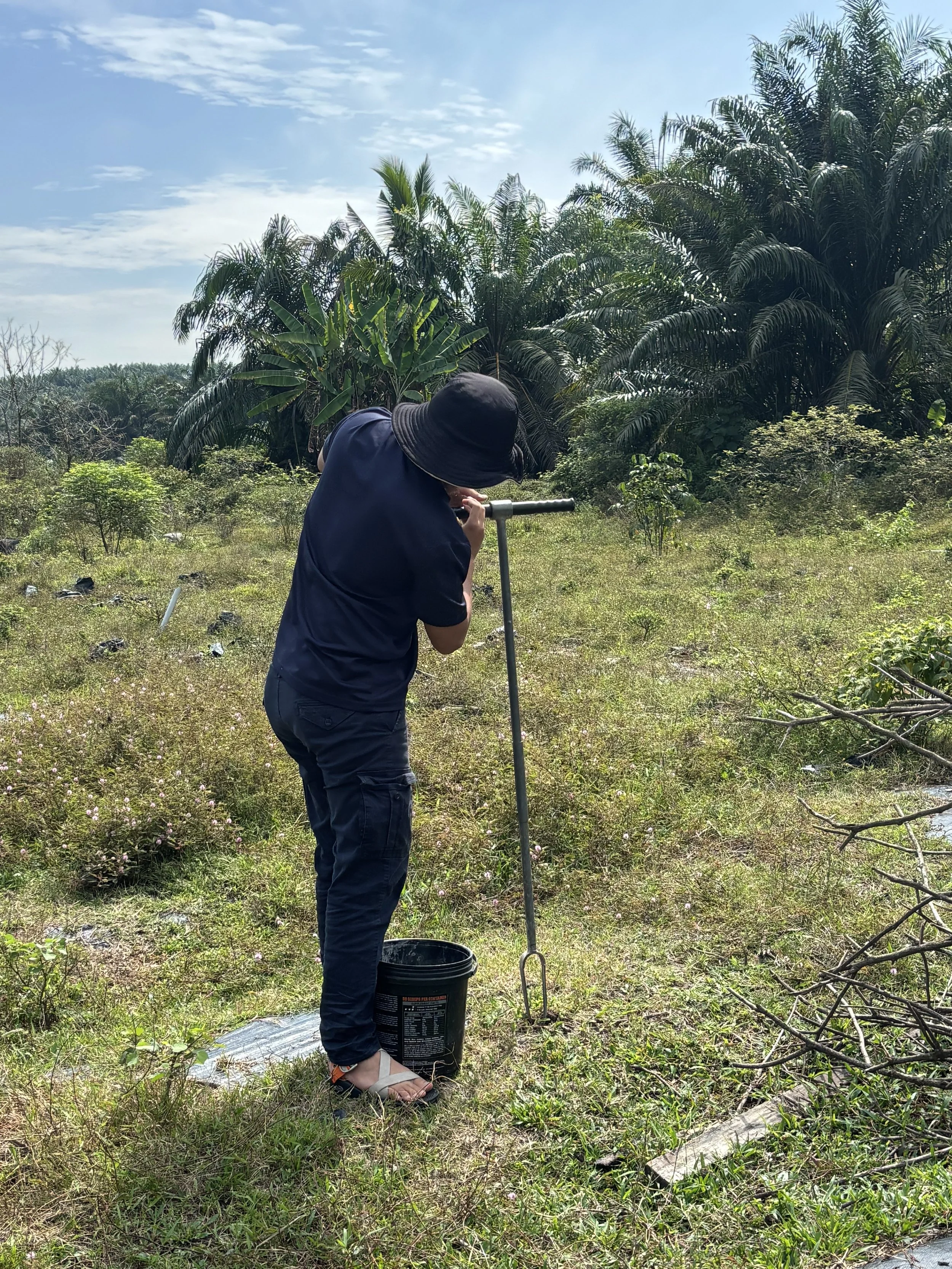
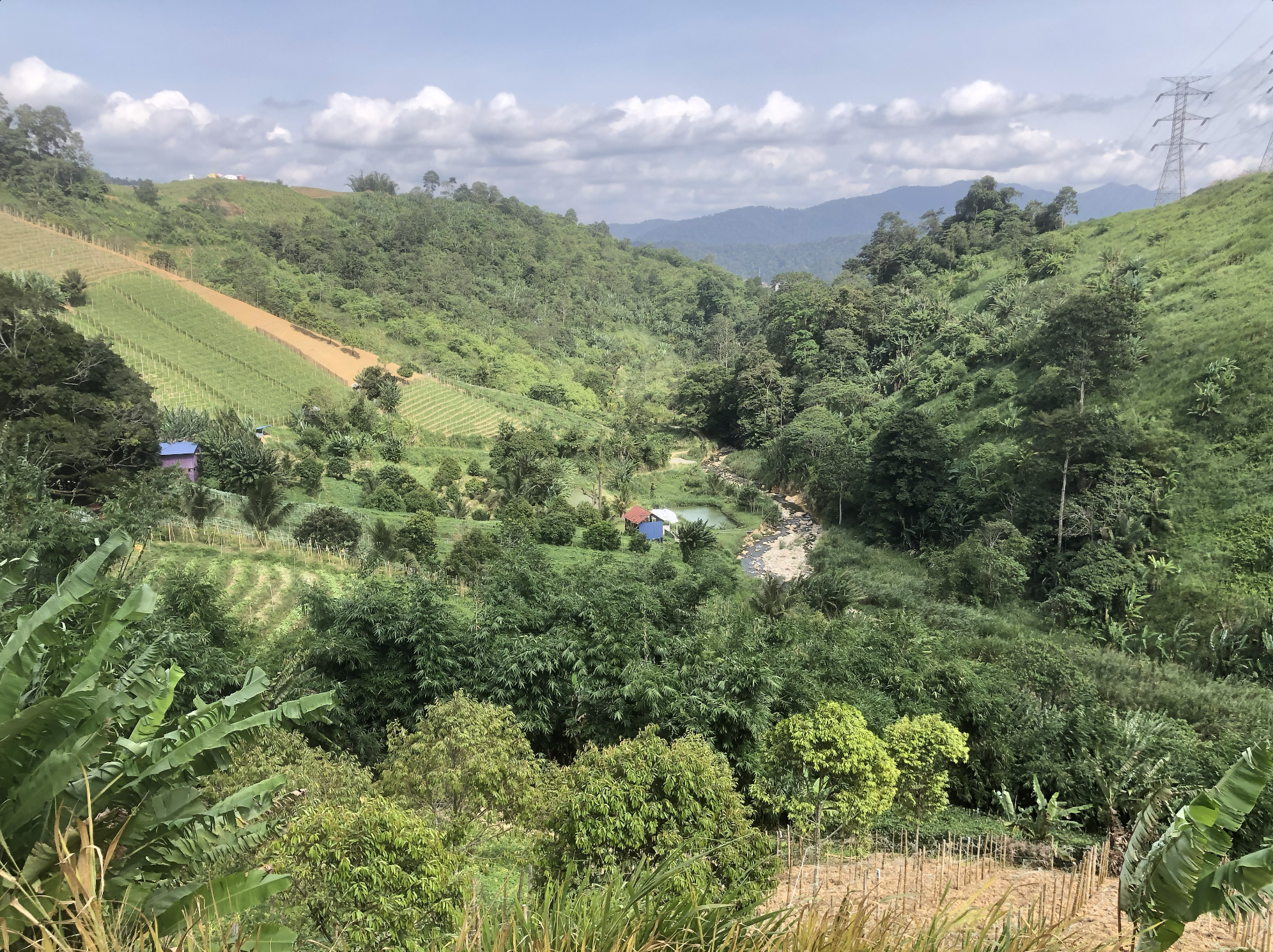
The next few months will focus on critical groundwork: mapping out clear boundaries, establishing input logbooks, and implementing key practices tailored to each farm's needs, including compost incorporation, cover cropping, and erosion control. For one farm with steep slopes, that means prioritising erosion monitoring. For another with strong existing practices, the focus will be on refining and documenting what’s already working. Throughout this process, each farmer will receive monthly visits, hands-on support, and guidance as these new practices are introduced.
By showing how a regenerative transition can be adapted across different conditions within a single coherent system, we are creating a replicable model for Malaysia that can inform broader replication in the future.
We are grateful to have these seven committed farmers on board and look forward to sharing their journey as the work takes root. We also look forward to delivering an upcoming two-day hands-on farmer training, which will cover regenerative practices and soil health management.
Stay tuned for more updates as we spearhead collective regeneration across Malaysia’s farms!