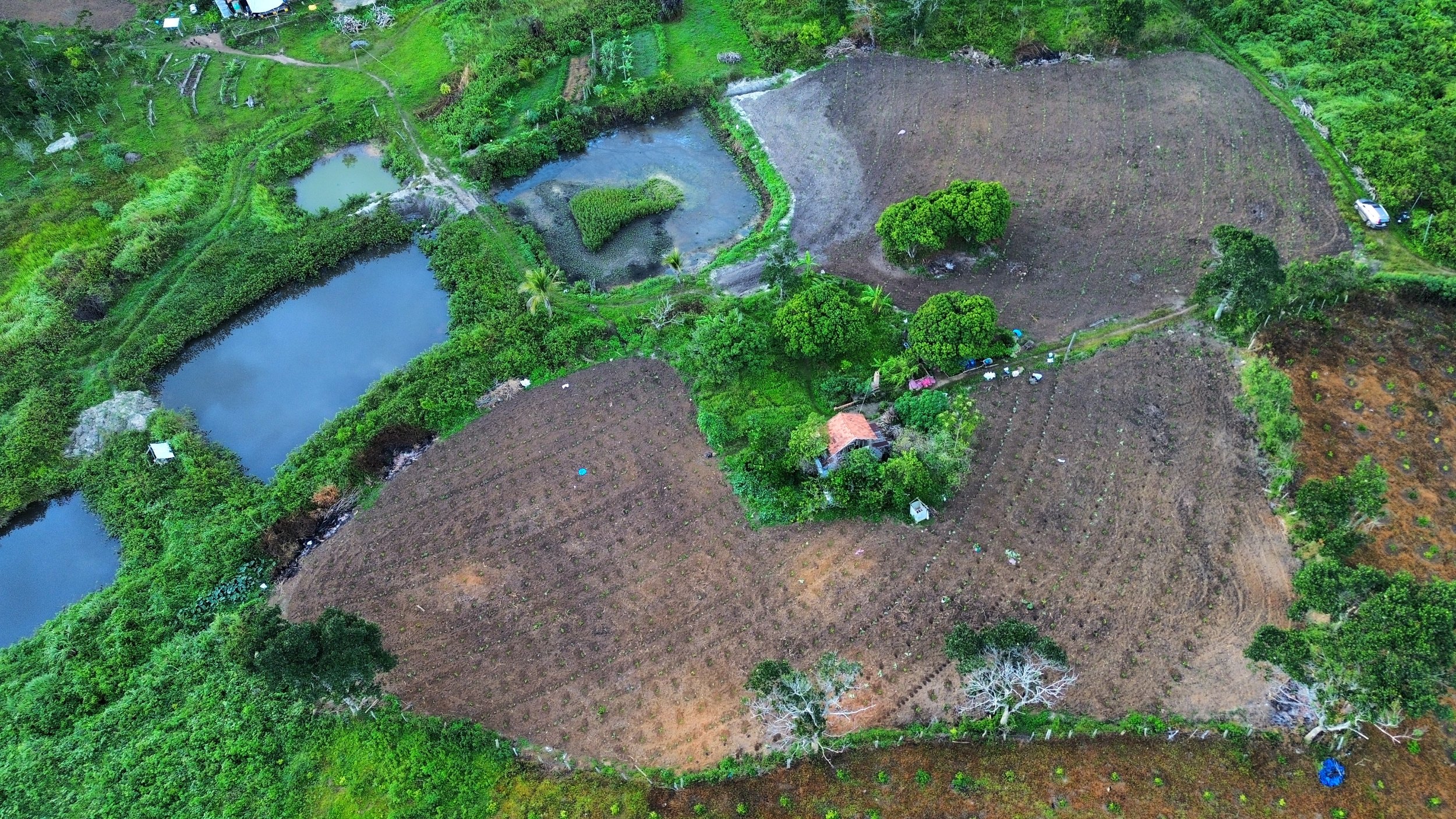
The rainy season in central Vietnam isn’t stopping our farmers from building high-impact regenerative systems!
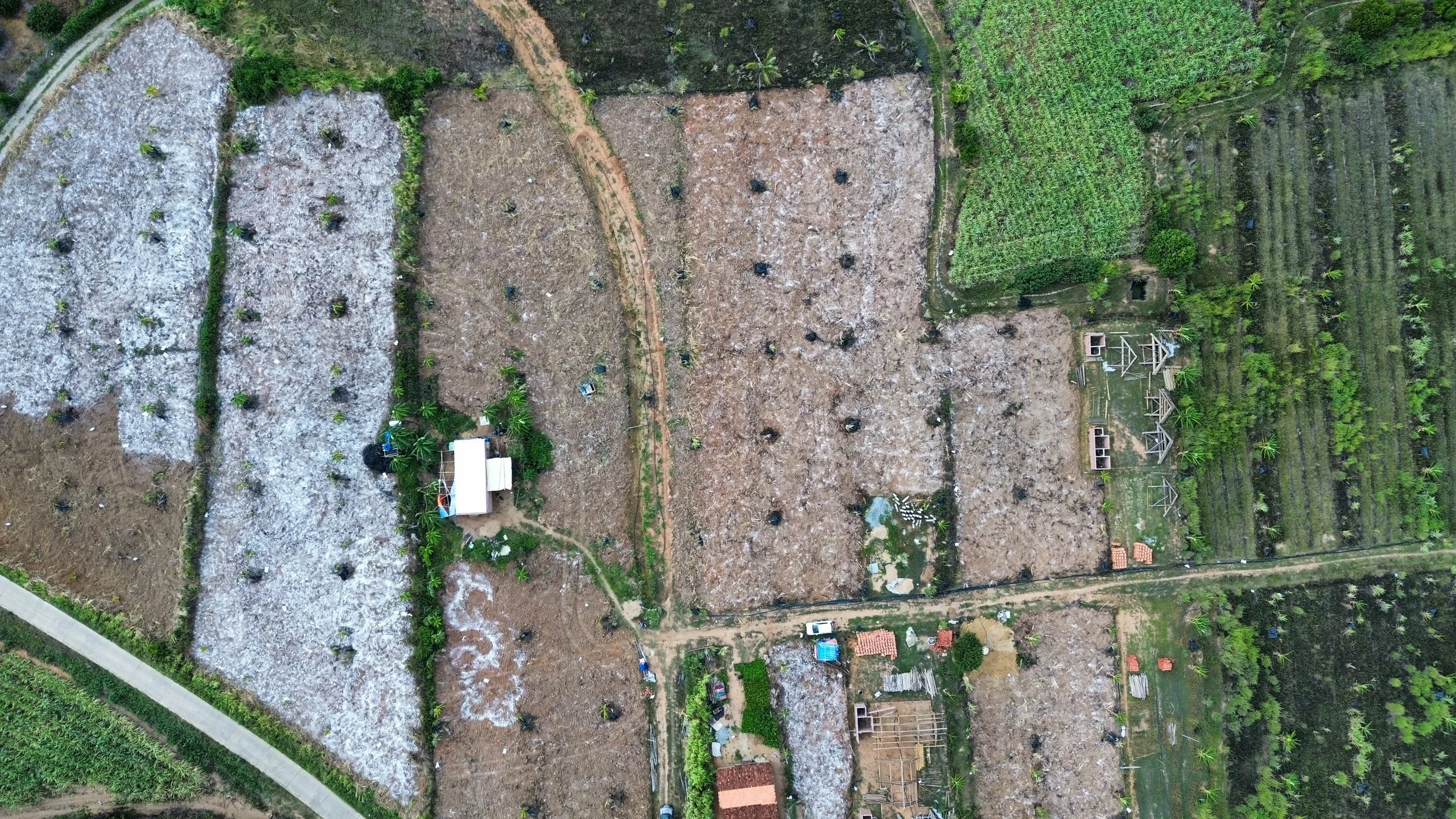
The syntropic regenerative model is now officially live across all four farms. With the help of our local technical team, Kim, David, and Trong helped farmers plant coffee alongside a diverse mix of succession species, including papaya, eucalyptus, timber trees, cassava, banana, and peanuts. During the early years, intercrops such as cassava and beans provide vital short-term income, as well as supplying biomass to the farm and enhancing soil fertility. As the ecosystem matures, the farms will be a haven of biodiversity. Natural defoliation of various trees will help stimulate the flowering process of coffee trees, the multi-layer system will reduce heat stress, allow better water retention, and unlock various revenue streams for farming families!
While the unpredictable rain only posed little trouble during the implementation stage, uncharacteristically strong winds—courtesy of the El Niño effect—present an ongoing challenge for young seedlings. Upcoming visits by the ground team will continue regular monitoring, refining nutrient management practices, and providing technical support during maintenance visits.
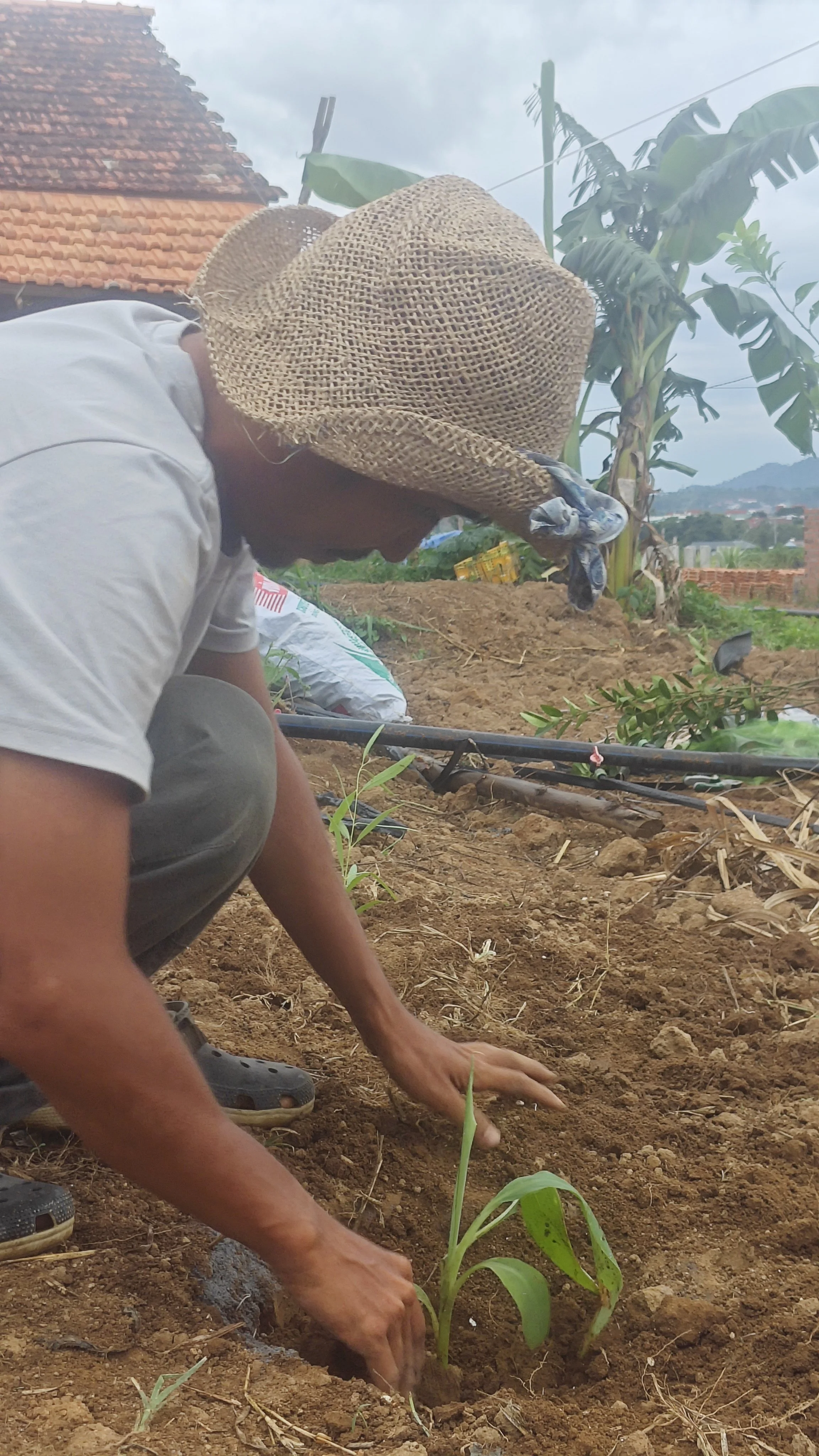
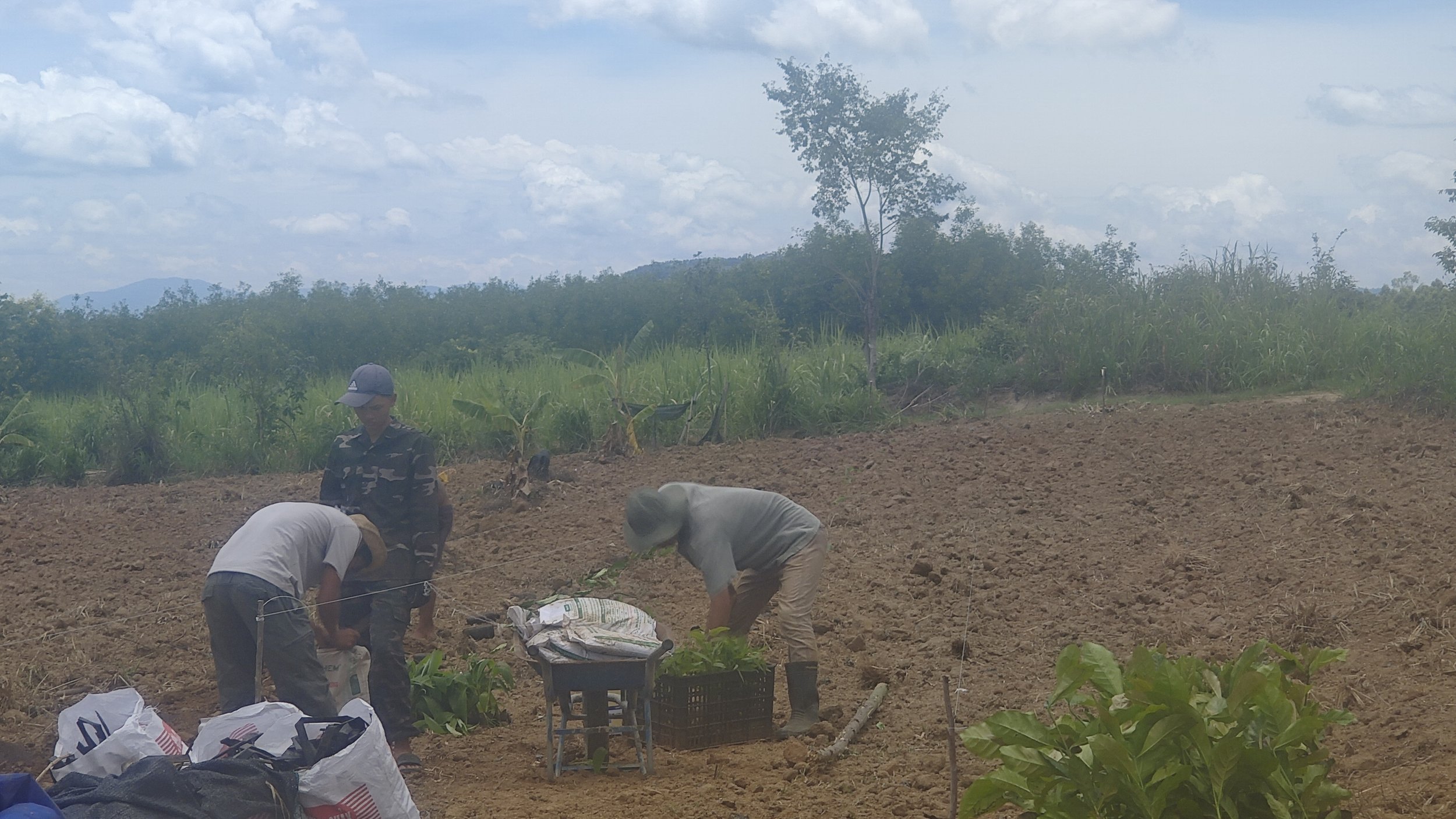
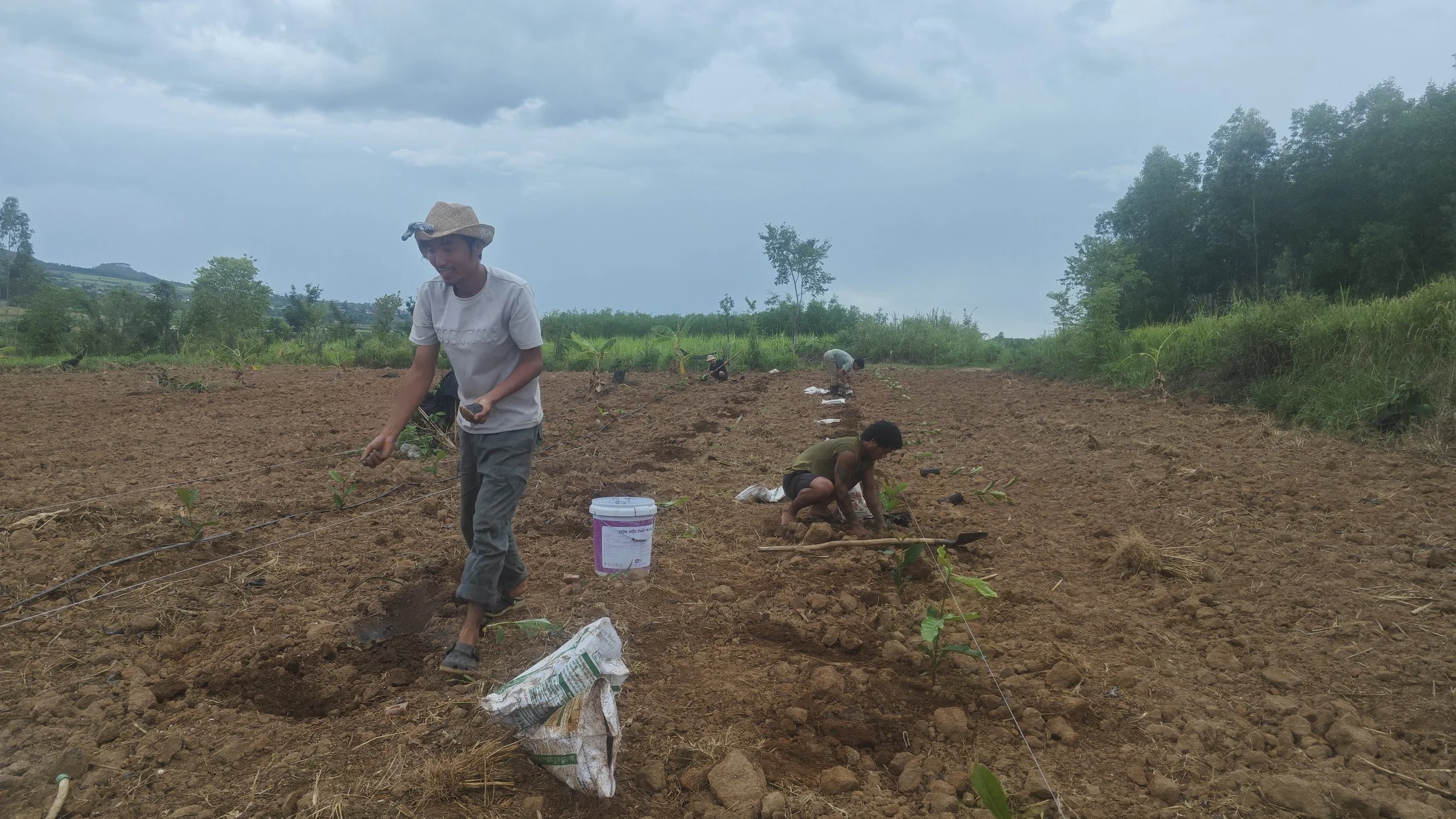
Complementing field operations, the first training workshop was held in early September. The classroom theory learning and on-the-field exercise covered key topics in agroforestry, including natural succession, canopy stratification, soil cover, and biodiversity, disseminating the foundational knowledge of regenerative practices. It was a resounding success, with the team receiving overwhelmingly positive feedback. High farmer engagement led to the creation of a community group chat, facilitating real-time troubleshooting and knowledge-sharing between producers and the ground team. Never an inactive moment.
What a delight to see a community come together for a common cause.